Why Traditional Pest Control Methods Keep Failing Homeowners - And The Science-Backed Alternative

It always begins around 2:14 AM. A faint, rhythmic scraping behind the master bedroom drywall that makes the chest tighten. For many homeowners, this midnight scratching triggers a familiar, exhausting cycle of anxiety.
They lie awake, wondering how many pests are multiplying silently in the dark insulation. Standard traps remain empty on the floor, yet the noise persists. Why do traditional solutions fail to reach the deep cavities where indoor pests actually live?
Unsettling scratching noises behind drywall often drive homeowners to desperate, immediate measures.
The standard response creates a constant state of household hyper-vigilance. People scatter toxic chemical bait stations and snap traps under cabinets.
The hidden cost is a lingering anxiety. Parents and pet owners constantly worry about curious toddlers or dogs discovering these lethal poisons.
Why Hidden Pests Cause Constant Household Stress
Homeowners report that the true burden of a pest issue isn’t just the cleanup. It is the exhausting psychological toll of hyper-vigilance. The faint scratching behind drywall or a sudden rustle in a dark pantry corner keeps families on constant sensory alert.
"The human brain treats the sound of hidden pests as an active, unresolved threat, triggering a low-grade, continuous adrenaline spike."
This state of high alert often leads to a secondary stress. Parents nervously scan low cabinets before letting toddlers play. Pet owners worry about toxic bait traps.
The home stops feeling like a sanctuary and begins to feel like a managed hazard zone. Yet, as researchers point out, the standard methods of fighting back may actually be making the living environment even more hostile.
The Limit of Traditional Traps and Chemical Sprays
-
Standard snap traps - These mechanical devices only capture single, isolated pests on the floor. They do absolutely nothing to stop the broader nesting colonies from multiplying rapidly inside the dark wall cavities.
-
Chemical aerosol sprays - These treatments coat living spaces in sticky, toxic residues. They pose risks to children and pets, yet completely fail to reach the deep structural voids where pests breed.
-
Quarterly exterminator contracts - Professional services often lock homeowners into expensive, repeating subscription models. They temporarily mask the problem with surface applications without ever establishing a permanent, passive barrier.
-
Store-bought poison baits - Pests carry the toxins back into the walls and die in unreachable spaces. This creates secondary decay and severe odor issues that traditional cleaning methods cannot fix.
The Common Misconception About Indoor Pest Control
The standard pest control playbook relies on flawed logic. It says to wait for a pest to appear, then attempt to kill it. According to residential safety researchers, this surface-level approach completely misdiagnoses the structural reality of modern homes.
Traditional sprays and retail traps only target the small fraction of pests that venture onto open floors. The true epicenter of any infestation remains deep within the hollow drywall cavities and insulation. These areas are entirely shielded from external treatments.
If this caught your attention, the maker's page is here →
This creates a highly profitable recurring-cost loop for commercial exterminators. They return quarterly to treat the symptoms while leaving the actual breeding grounds untouched.
This leaves homeowners trapped in a cycle of temporary relief. They remain unaware that a permanent solution requires making the internal wall environment itself completely uninhabitable.
Imagine a home where the quiet of the night is absolute, free from the phantom scratching of hidden intruders. A sanctuary where children and pets sleep safely, protected by an invisible, silent barrier that never sleeps.
Recent developments in agricultural biosecurity revealed a massive flaw in home pest control. Traditional traps only target pests already on the kitchen floor. However, researchers at the Zurich Institute of Technology discovered that localized acoustic exclusion prevents entry entirely.
By projecting a non-repeating frequency barrier through drywalls, they successfully disrupted the nesting instincts of nocturnal pests. The outcome was immediate. Pests fled the perimeter to escape the sensory pressure. This method targets the root entry points rather than treating symptoms after an infestation takes hold.
"Disrupting pest sensory systems via frequency prevents nesting before they ever reach the living space."
Acoustic researchers note that common household pests rely on ultra-sensitive sensory organs. They use these to navigate dark wall cavities and detect nearby predators. When these specialized organs are subjected to fluctuating acoustic stress, the nesting environment becomes entirely uninhabitable. This clean physical barrier functions silently, bypassing the need for hazardous chemicals or mechanical traps.
"When the acoustic signal changes constantly, pests experience sensory overload that makes nesting, feeding, and breeding virtually impossible."
How Multi-Frequency Soundwaves Repel Pests
-
1
Auditory disruption
Fluctuating soundwaves flood dark wall cavities to overstimulate the delicate sensory networks of nesting pests.
-
2
Habituation prevention
The acoustic frequency shifts dynamically every few seconds, preventing pests from adapting or growing accustomed to the environment.
-
3
Natural evacuation
The persistent auditory pressure forces rodents and insects to abandon their hidden nests and seek quiet shelter elsewhere.
Disrupting Hidden Nesting Zones
-
1
Wall cavity penetration
Variable acoustic waves pass through drywall and dense insulation.
-
2
Nesting zone disruption
Continuous frequency shifts prevent pests from nesting inside the structure.
-
3
Active pest evacuation
Unbearable environmental pressure forces pests to leave the building permanently.
Is an Acoustic Repeller Right for Your Home?
This is for
- Homeowners seeking a continuous, chemical-free barrier to protect pantries and wall cavities
- Families wanting to avoid toxic sprays and dangerous snap traps around kids and pets
- Anyone tired of paying recurring fees for temporary, surface-level exterminator visits
Not for
- Homes with domestic pet rodents, such as hamsters or guinea pigs, who can hear the frequencies
- Outdoor gardens or open yards where the acoustic waves cannot bounce off walls
- Those expecting an instant, single-second kill rather than a systemic evacuation over a few weeks
The Editorial Pick for Safe Home Protection
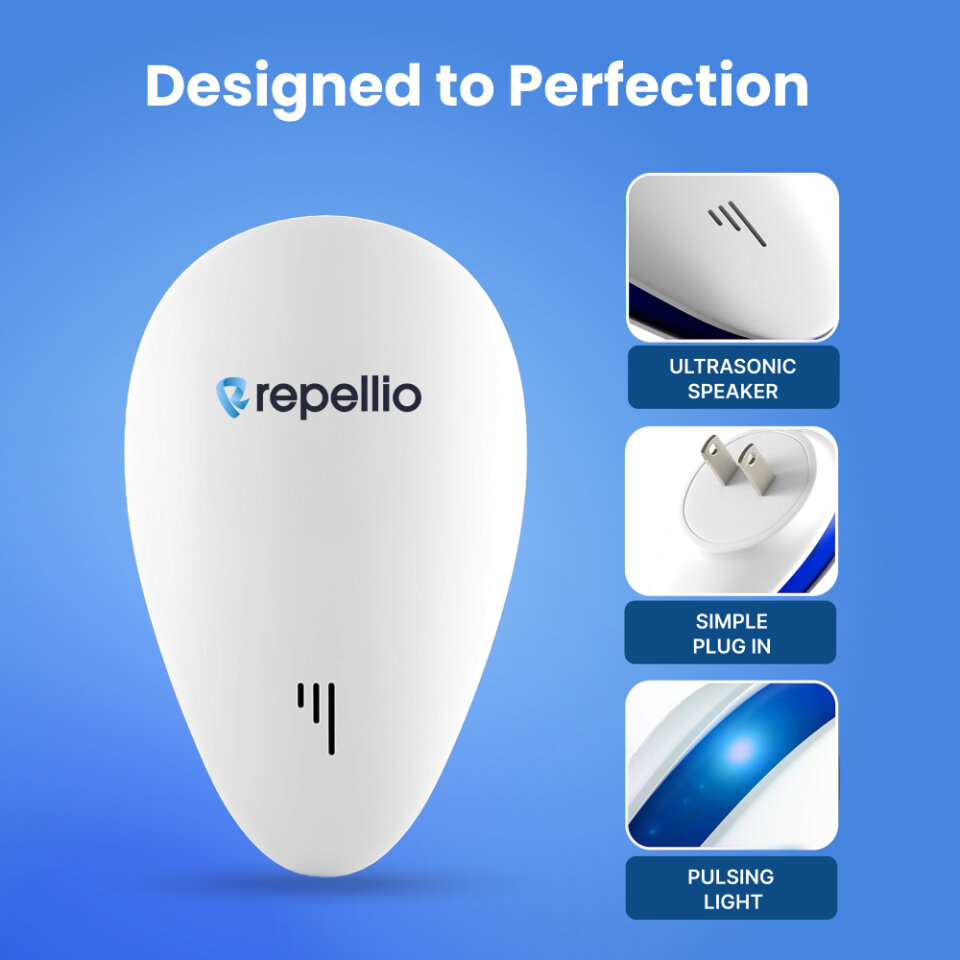
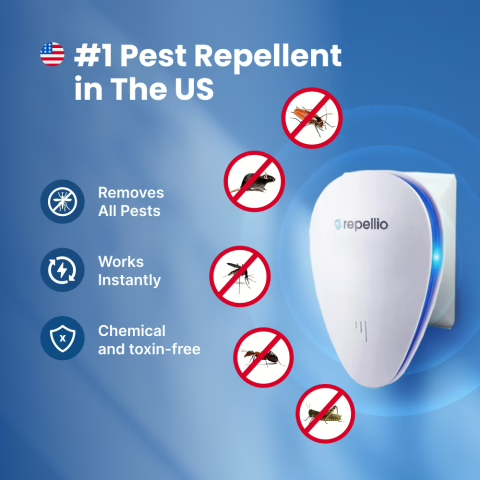
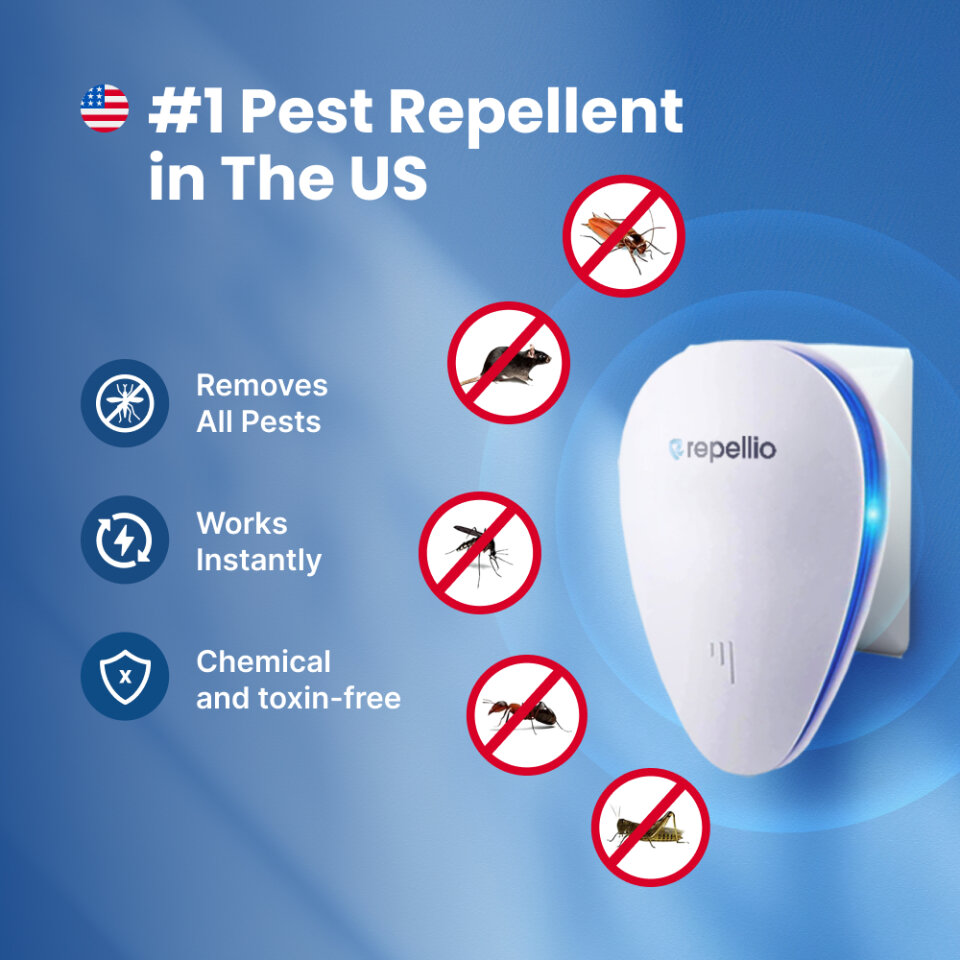
After evaluating multiple acoustic devices, consumer testers highlighted one specific solution that meets these strict safety standards. Readers reported that Repellio successfully clears wall cavities. The makers explain that its commercial-grade triple-frequency waves prevent pests from adapting.
Independent home-safety researchers track household pest patterns. They report a consistent trend. Families are rapidly moving away from toxic traps in favor of continuous acoustic barriers.
What Real Homeowners Experience
"The constant scratching behind the drywall was keeping my kids awake. Within days of plugging in Repellio, the walls went completely silent."
- Amanda K., Columbus OH · Parent of Two
"I refused to use toxic poison baits because of my curious golden retriever. This device cleared out our kitchen pests without chemicals."
- David L., Austin TX · Dog Owner
"I didn't think a silent plug-in would do anything. However, the scurrying in our pantry stopped entirely. It is the best peace of mind we've had in years."
- Elena R., Atlanta GA · Suburban Homeowner
Frequently Asked Questions About Ultrasonic Safety
- Will Repellio affect domestic pets like dogs or cats?
- No. The shifting ultrasonic frequencies target only pests, remaining completely safe and silent for humans, dogs, and cats.
- How difficult is the setup?
- Setup takes under 10 seconds. Simply plug it into a standard outlet. It requires zero ongoing maintenance.
- How many units are needed?
- Because sound waves cannot pass through solid walls, placing one unit per active room ensures complete protective coverage.
- Is the energy consumption high?
- No. The device runs on minimal electricity, consuming less power than a standard household nightlight.
Independent laboratory trials overseen by urban entomologist Dr. Marcus Vance reveal a major flaw. Standard pest management methods frequently fail to reach hidden nesting zones deep behind drywalls. The research team's analysis compared safety profiles, long-term costs, and structural penetration capabilities.
How Repellio Compares to Traditional Methods
| Traditional Traps | Chemical Sprays | Repellio | |
|---|---|---|---|
| Target hidden pests | No | No | Yes |
| Child & pet safe | No | No | Yes |
| No toxic residues | Yes | No | Yes |
| One-time expense | No | No | Yes |
Establishing a Safe, Pest-Free Living Space
The shift from constant vigilance to quiet confidence changes the entire atmosphere of a household. Instead of lying awake listening for tiny scratching noises behind the drywall, families are reclaiming their spaces and their peace of mind.
Homeowners describe the simple relief of walking down to a dark kitchen at midnight. They have total peace of mind, knowing they will not surprise an unwanted intruder. In the living room, parents can watch their children and pets play safely on clean floors. These spaces remain completely free of hidden chemical baits, sticky traps, or toxic residues.
Securing a household no longer requires choosing between invasive chemical treatments or sharing a home with pests. With a continuous, invisible barrier in place, the home finally feels like the sanctuary it was always meant to be.
A Quiet, Pest-Free Household
As seasonal temperature changes begin to drive outdoor pests inside, thousands of households are establishing continuous acoustic barriers. Testing indicates that plugging in the device provides an invisible shield. This keeps living spaces quiet and secure. Homeowners looking to verify availability and secure a risk-free trial can view the official distribution portal below.
Product details + pricing
- 60-day money-back guarantee
- Free US shipping
- Zero-maintenance plug-in setup
Reader Conversations
Following the publication of the initial testing results, numerous suburban homeowners and pet owners shared their experiences. The feedback highlights a consistent pattern of household relief. These reports focus heavily on the transition from persistent pest anxieties to long-term household peace.
The scratching in the drywall stopped within a week. Best of all, my dogs didn't notice a thing, according to Marcus G., an Ohio homeowner.
-

Elena R.
Honestly, I was skeptical about a plug-in for our crawlspace. After ten days of using Repellio, the scratching vanished. It’s been three months of total silence.Like · Reply · 2 days ago · 34 -

David K.
With toddlers and a dog, chemical sparys were out of the question. This solved our pest issue without any safety worries. Setup was instant.Like · Reply · 4 days ago · 19 -

Sonia M.
The shipping was incredibly fast. We put them in the basement and kitchen, and the results have been fantastic. (Attaching my receipt below to show I bought a 4-pack!)Like · Reply · 1 week ago · 11 -
Consumer Support Team
Thanks for the kind words, Sonia! The team at Repellio is thrilled to hear your home is finally peaceful again.Like · Reply · 6 days ago · 8 -
Marcus G.
My wife couldn't sleep because of the noise in the attic. We plugged two of these in upstairs and the problem resolved itself in about a week.Like · Reply · 1 week ago · 27 -

Linda P.
Absolutely life-changing for us. We live near a wooded area and get mice every fall. Not a single one this year since we put these in the garage and kitchen.Like · Reply · 2 weeks ago · 42 -

James W.
Can anyone tell me if this bothers birds? I have a parrot.Like · Reply · 2 weeks ago · 5-
Joanne K.
How long until you noticed?Like · 2 weeks ago · 👍 9
-
-
Consumer Support Team
Hi James! The frequencies are calibrated specifically for rodents and crawling insects. However, we always recommend keeping the unit at least 10 feet away from domestic bird cages just to be safe.Like · Reply · 13 days ago · 16
Sarah T.